DeFi Developer Jobs: Where to Find Them and How Much They Pay
Real salary ranges for DeFi developer jobs in 2026, plus the exact channels and skills that get you hired, even without prior crypto experience.

TLDR
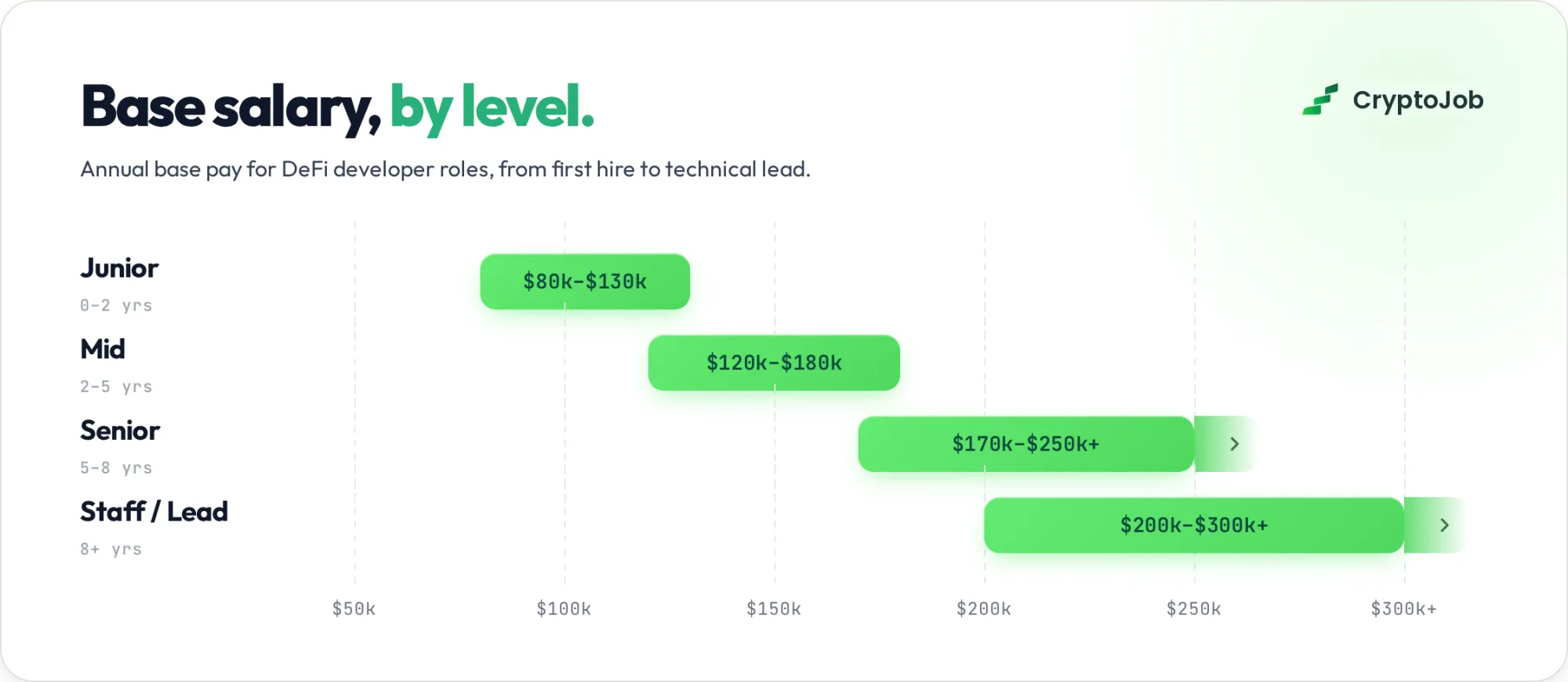
- DeFi developer jobs typically pay $80k to $130k junior, $120k to $180k mid, $170k to $250k+ senior (US remote)
- Solidity plus one general language (TypeScript or Rust) is the core stack
- Most roles are remote and global
- Best sources: crypto-native job boards, protocol Discords and direct outreach
- Security skills add the biggest pay premium
If you're hunting for DeFi developer jobs right now, here's the short version. Most roles are remote, most pay in the low to mid six figures in USD and the fastest way in is a mix of crypto-native job boards, protocol communities and a public GitHub that proves you can ship. Salaries vary a lot by experience and funding stage, but a mid-level engineer at a funded protocol can realistically expect $120k to $180k, often with token upside on top.
You can start applying today by browsing web3 jobs on CryptoJob, then use the rest of this guide to target the right roles and negotiate properly.
Below we'll break down what these roles actually involve, what they pay at each level, where the openings are and how to land one without prior crypto experience.
1. What Does a DeFi Developer Actually Do?
A DeFi developer builds the software behind decentralized finance products: lending markets, DEXs, stablecoins, yield vaults and the infrastructure connecting them. The work splits into two broad tracks.
Smart contract engineers write the on-chain logic, usually in Solidity for EVM chains or Rust for Solana. Their code holds real money, so testing, audits and formal verification matter far more than in typical software jobs.
Full-stack and backend engineers build everything around the contracts: frontends, indexers, APIs, bots and monitoring. This track is the most common entry point because it reuses skills you may already have, like TypeScript, React, Node or Go.
2. How Much Do DeFi Developer Jobs Pay?
Short answer: more than comparable web2 roles at the same level, with wide variance. Published averages range anywhere from roughly $120k to $190k depending on which job board's data you look at, so treat any single "average" number with suspicion.
What holds up across sources is the shape of the curve by seniority. Here's a realistic picture for full-time remote roles paid at US-market rates in 2026:
|
Level |
Experience |
Typical base (USD) |
Notes |
|
Junior |
0 to 2 years |
$80k to $130k |
Higher end needs a strong portfolio or hackathon wins |
|
Mid-level |
2 to 5 years |
$120k to $180k |
Solidity proficiency pushes you toward the top |
|
Senior |
5+ years |
$170k to $250k+ |
Often includes token or equity grants |
|
Staff / Lead |
7+ years |
$200k to $300k+ |
Common at well-funded protocols and exchanges |
Real listings back this up. Recruiters have posted principal frontend DeFi roles at $200k to $300k for US and EU remote candidates, and senior infrastructure roles at layer-2 teams have advertised up to $250k. On the flip side, generalist listings on mainstream boards often cluster around $119k to $158k, which reflects the long tail of smaller companies.
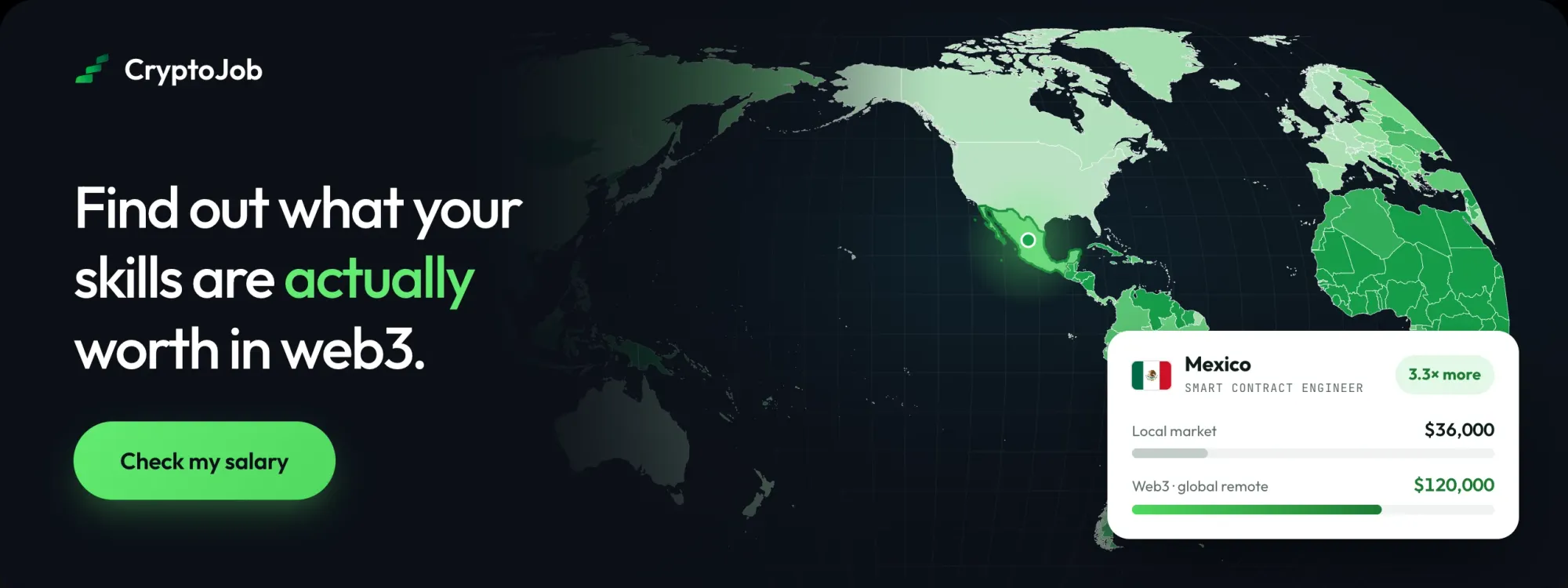
One honest caveat: pay in emerging markets and at unfunded startups can sit well below these ranges. Location-agnostic pay is common but not universal, so always ask whether a company benchmarks to US rates.
2.1 What About Tokens and Equity?
Many DeFi teams add token allocations or startup equity on top of base salary. These can be worth nothing or worth more than your salary, so treat them as a lottery ticket rather than income. Negotiate base first, upside second.
2.2 What's a Realistic DeFi Engineer Salary by Specialization?
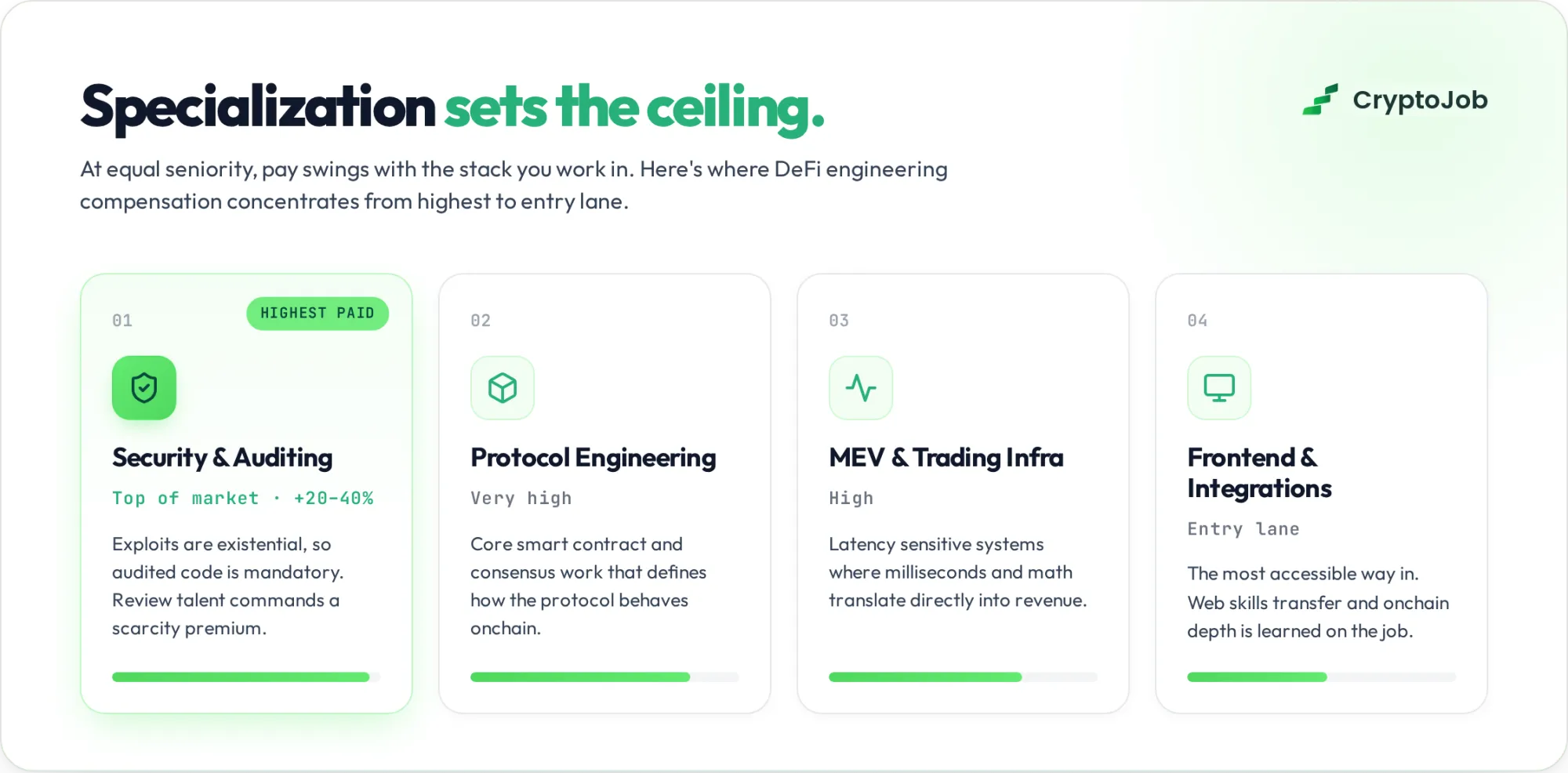
Beyond seniority, your niche moves the needle more than almost anything else. A typical DeFi engineer salary breaks down roughly like this by focus area:
Smart contract security pays the most. Auditors and security-minded protocol engineers routinely out-earn generalists by 20 to 40 percent, because one missed bug can cost a protocol millions. Top independent auditors on contest platforms can out-earn salaried roles entirely.
Protocol engineering (core smart contracts) comes next. Deep Solidity or Rust plus an understanding of DeFi mechanics like AMM math, liquidations and oracle design puts you in the scarcest talent pool.
MEV and trading infrastructure roles at quant-style firms can rival or beat protocol pay, sometimes with performance bonuses. Senior engineering roles at large exchanges have advertised packages around $247k.
Frontend and integrations pays the least within DeFi but is still strong. It's also the easiest lane to enter from web2.
3. Where Can You Find DeFi Developer Jobs?
The openings exist, but they don't all live on LinkedIn. Work these channels in parallel.
3.1 Crypto-Native Job Boards
Start where the roles are concentrated. Browse web3 jobs on CryptoJob to filter DeFi roles specifically and check boards like Cryptocurrency Jobs, web3.career and Remote3 for volume. Crypto-native boards list roles that never reach mainstream sites.
3.2 Protocol Communities and Discords
Many teams hire from their own communities before posting publicly. Join the Discords of protocols you actually use, answer developer questions and watch the jobs channels. A known name in a community skips half the interview funnel.
3.3 Hackathons and Grants
ETHGlobal hackathons, Solana hackathons and ecosystem grant programs are hiring pipelines in disguise. Winning or even placing gives you a public credential plus direct contact with sponsoring teams.
3.4 Direct Outreach
DeFi teams are small. A short message to a founder or lead engineer with a link to something you built on their protocol converts surprisingly well. Fork their contracts, build a small tool or dashboard, then show it to them.
4. Which DeFi Jobs Are Easiest to Break Into?
Not every role demands deep smart contract experience. If you're transitioning from web2, these DeFi jobs have the lowest barrier:
Frontend engineer. React plus wallet libraries like wagmi or viem gets you interview-ready in weeks, not years. Most protocols desperately need better UIs.
Backend / data engineer. Indexing on-chain data, building APIs and running bots uses standard backend skills. Learning to read contracts is enough to start; writing them can come later.
DevRel and integrations. If you can code and communicate, developer relations roles at infrastructure companies pay solidly and teach you the ecosystem fast.
From any of these seats, moving into smart contract work internally is far easier than landing a contract role cold.
5. What Skills Do You Need in 2026?
The core stack hasn't changed much, but the bar has risen. Prioritize in this order:
- Solidity fundamentals including the EVM, gas optimization and common vulnerability patterns (reentrancy, oracle manipulation, access control)
- Testing frameworks, primarily Foundry, plus fork testing against mainnet state
- One general-purpose language at a professional level, usually TypeScript or Rust
- DeFi mechanics: how AMMs price assets, how lending liquidations work, how bridges and L2s move value
- Security mindset: read audit reports from firms like Trail of Bits and post-mortems of real exploits
A public GitHub with two or three complete projects beats any certificate. Good starter builds: a minimal AMM, a vault that composes with an existing protocol or a liquidation bot on a testnet.
6. How Do You Land Your First Role Without Crypto Experience?
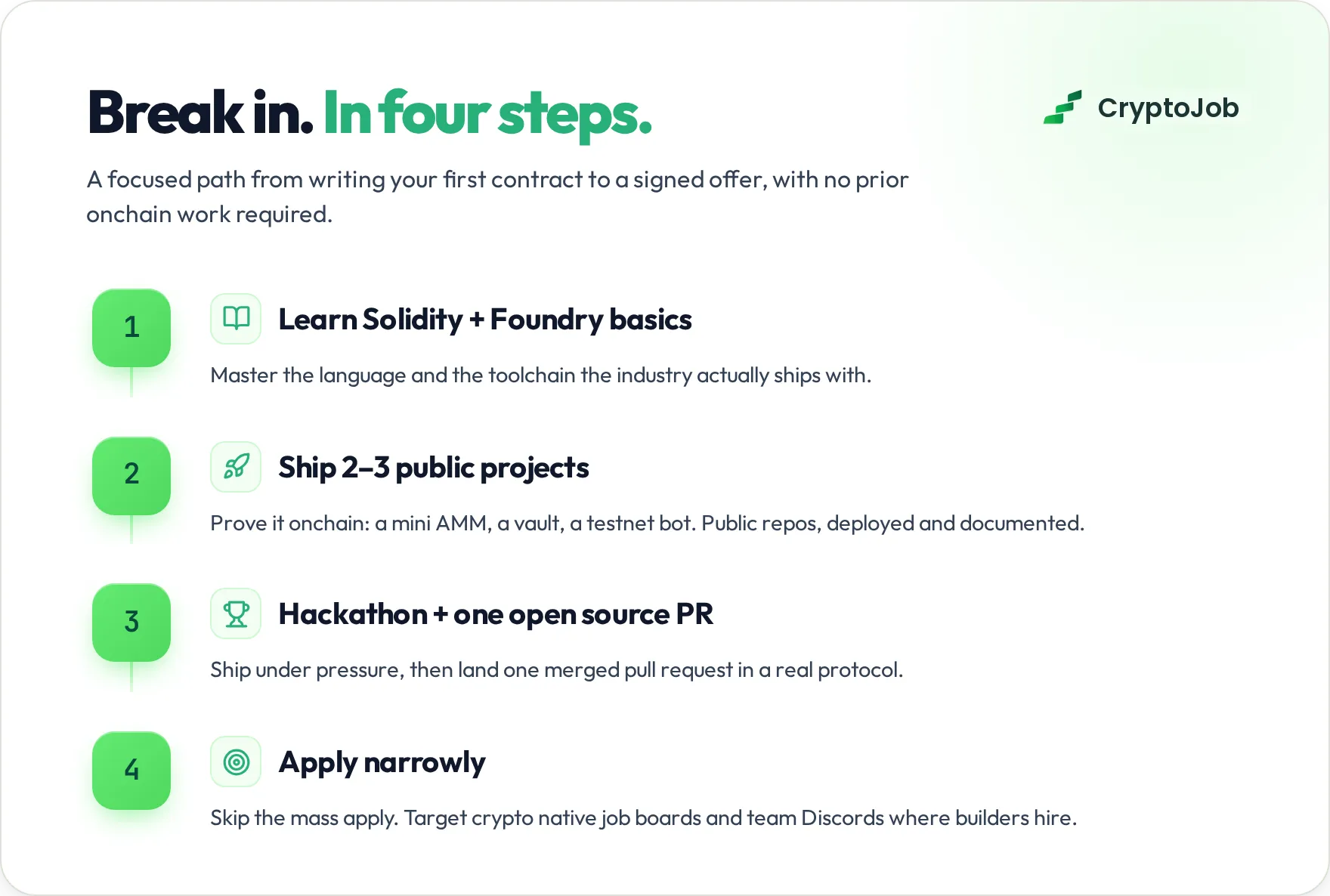
Follow a simple sequence and give it three to six months of consistent effort.
First, build in public. Ship small projects, write short posts explaining what you learned and keep everything on GitHub. Hiring managers in DeFi check your commits before your CV.
Second, enter one hackathon and contribute to one open-source protocol repo. Even a merged documentation fix gets your name into a team's orbit, and a hackathon finish is a portfolio anchor.
Third, apply narrowly. Ten tailored applications referencing a team's actual codebase beat a hundred generic ones. Mention the specific contract, bug or feature you looked at.
7. Is DeFi Still a Good Career Bet?
Fair question after several boom-bust cycles. The honest answer: developer demand has stayed resilient even through downturns, because the talent pool with real protocol experience remains small. Salaries held or grew through the last bear market while other tech sectors froze hiring.
Risks are real too. Startups fail, token packages can go to zero and regulation shifts. Mitigate by favoring teams with runway, revenue or serious backers and by negotiating solid base pay rather than betting everything on tokens.
Ready to Start Applying?
You now know the numbers, the channels and the skills that move your pay. The market rewards people who ship publicly and apply with specificity, so pick one project to build this week and set up alerts on the boards that matter.
Start with the live listings: browse web3 jobs on CryptoJob and filter for DeFi roles that match your stack.
FAQ
How much do DeFi developers make per year?
Most full-time roles paid at US-market rates fall between $120k and $250k depending on seniority, with juniors starting around $80k to $130k. Specialists in security or protocol engineering earn toward the top. Pay varies widely by company funding and location policy.
Can I get a DeFi developer job without a degree?
Yes. DeFi hiring is heavily portfolio-driven. A public GitHub, hackathon results and open-source contributions carry more weight than formal credentials at most protocols and startups.
Do I need to know Solidity to work in DeFi?
Not for every role. Frontend, backend and data positions mainly need TypeScript or similar, plus enough Solidity literacy to read contracts. You'll need real Solidity or Rust skills for protocol engineering roles.
Are DeFi developer jobs remote?
Mostly, yes. The majority of teams hire globally and work async. Some exchanges and larger firms prefer hubs like New York, London, Singapore or Dubai, but remote-first remains the norm.
How long does it take to become job-ready?
If you're already a working developer, three to six months of focused study and building is a realistic timeline for frontend or backend DeFi roles. Protocol engineering roles usually take longer, often a year or more of hands-on smart contract work.