Crypto Customer Support Jobs: The Most Overlooked Entry Point
Support is crypto's widest entry door. What it pays, who hires around the clock and how agents move into compliance and ops.

TL;DR
- Crypto customer support jobs are the widest entry door into the industry
- US pay averages about $23 per hour, salaried roles run $45K to $70K
- Exchanges like OKX, Kraken and Crypto.com hire support around the clock
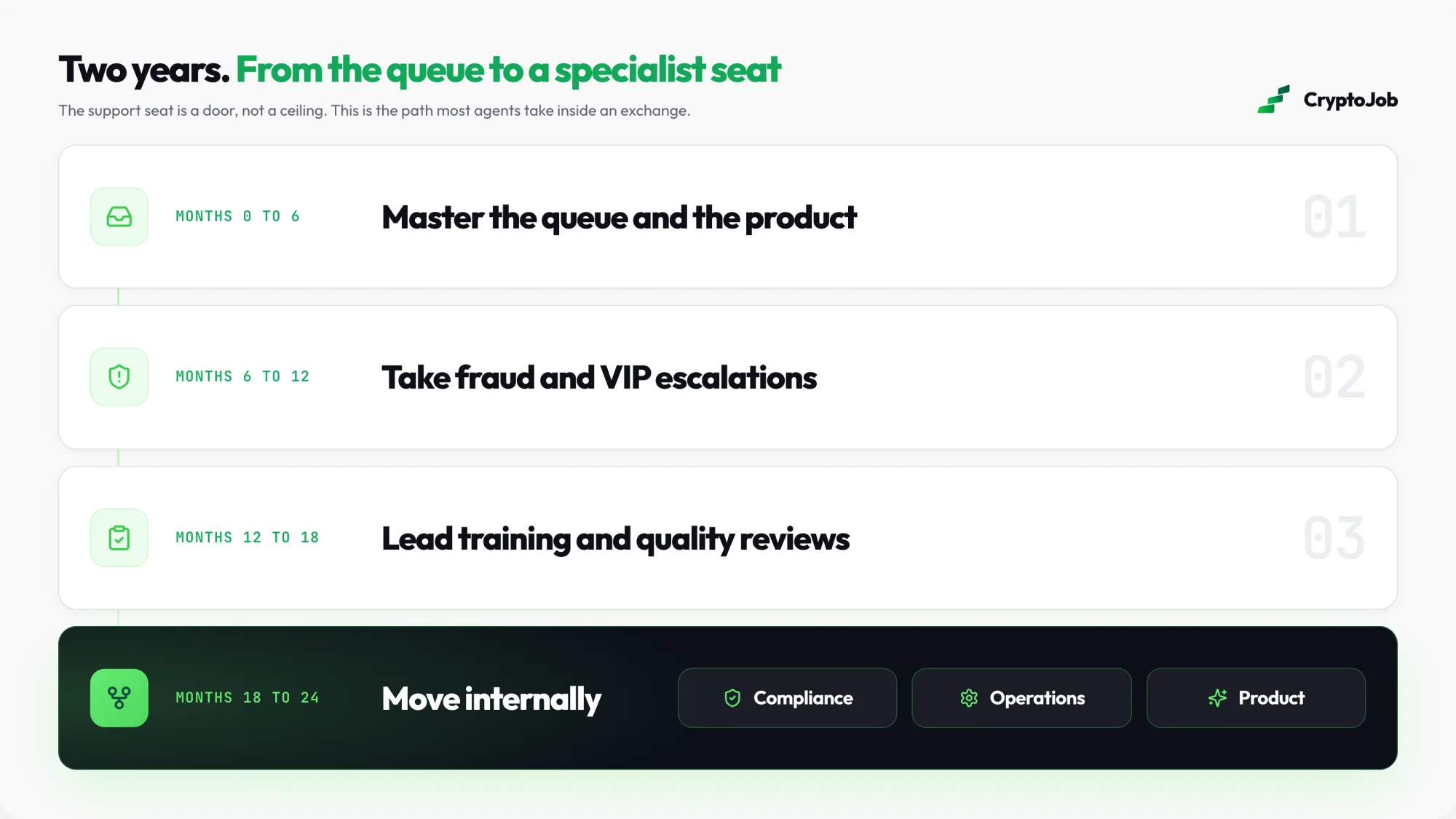
- Agents commonly promote into compliance, operations and product within 2 years
Crypto customer support jobs are the most reliable way into the industry without a technical degree, a network or prior web3 employment. ZipRecruiter puts average US pay at about $23 per hour as of August 2026, salaried exchange roles commonly land between $45K and $70K and job boards list dozens of openings at any moment. This guide covers the pay, the employers, the shift reality and the promotion paths that make support worth taking seriously.
The role gets dismissed as unglamorous, which is exactly why it stays winnable while engineering roles drown in applicants. You can browse web3 jobs and filter for support to see how many doors are open right now.
One honest caveat upfront: AI chatbots have absorbed much of the simplest ticket volume. The human roles that remain lean harder on judgment and security handling, and they pay accordingly.
1. What do crypto customer support jobs actually involve?
Day to day, agents resolve account access problems, explain delayed deposits and withdrawals, walk users through verification and handle the moments that matter most: suspected account compromise and fraud reports. Channels are mostly live chat and email, with phone support reserved for higher tiers at larger exchanges.
The crypto twist is irreversibility. A wrong bank transfer can be recalled, a wrong onchain transaction usually cannot, so agents carry more responsibility per conversation than typical fintech support.
That responsibility is the job's hidden value. Six months of tickets teaches you wallets, networks, KYC flows and scam patterns faster than any course, which is why so many careers start here.
2. What does crypto support pay in 2026?
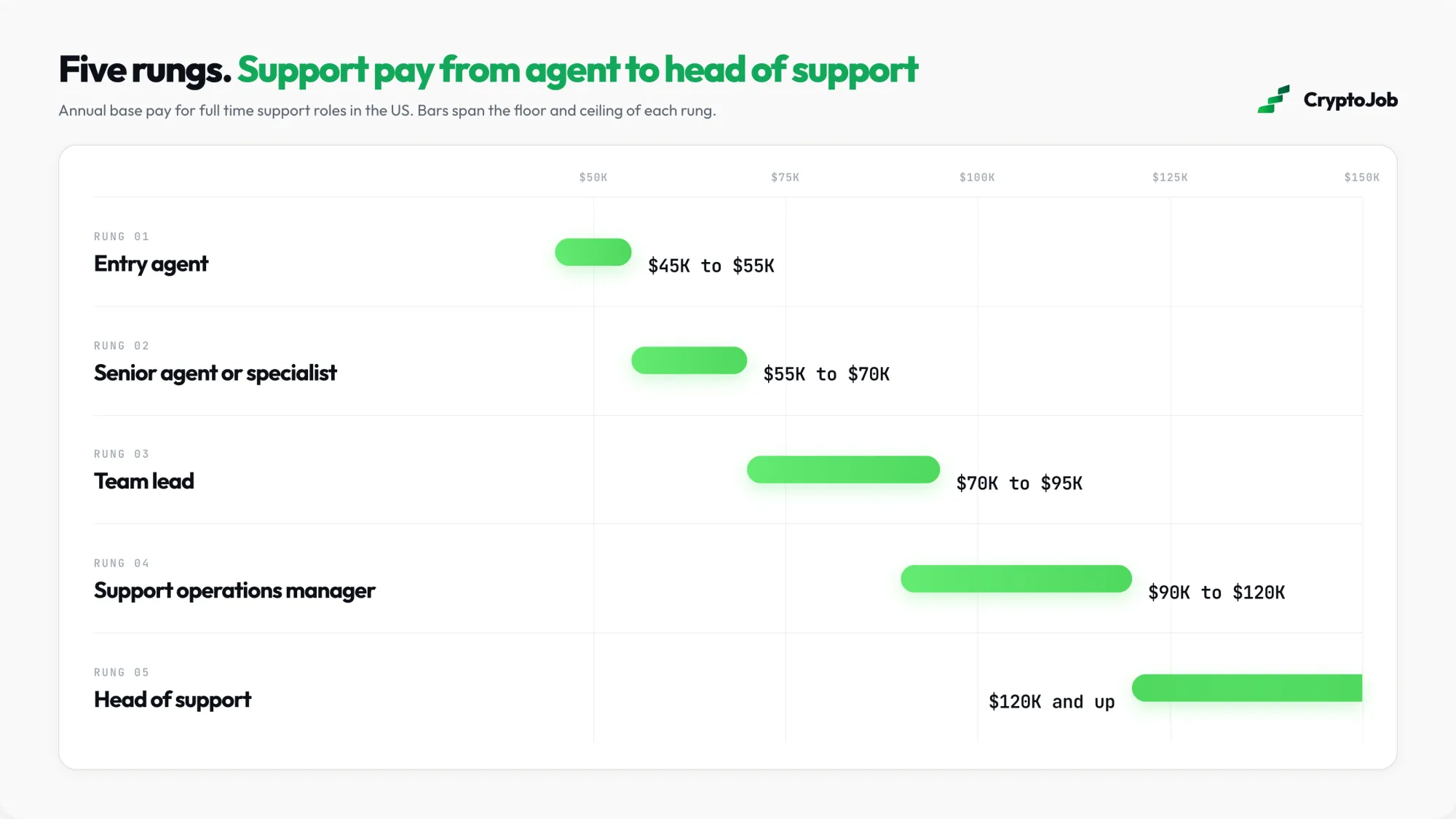
ZipRecruiter data from August 2026 shows US cryptocurrency support pay averaging $23.17 per hour, with most roles between $12 and $26 depending on employer and location. Salaried listings on crypto job boards typically run $45K to $70K for agents and specialists, and one aggregator currently shows support family roles from $52K up to leadership positions well past $150K.
Geography changes the math. Exchanges hire support globally, so the same queue might pay a London agent around £32,000 while a Southeast Asia based agent earns a locally benchmarked figure, and fully remote US roles cluster near the middle of the national range.
Seniority moves fast in this function. Team leads generally reach $70K to $95K, with support operations managers at $90K to $120K. Heads of support at funded companies start around $120K and climb from there.
3. Which companies hire crypto support agents?
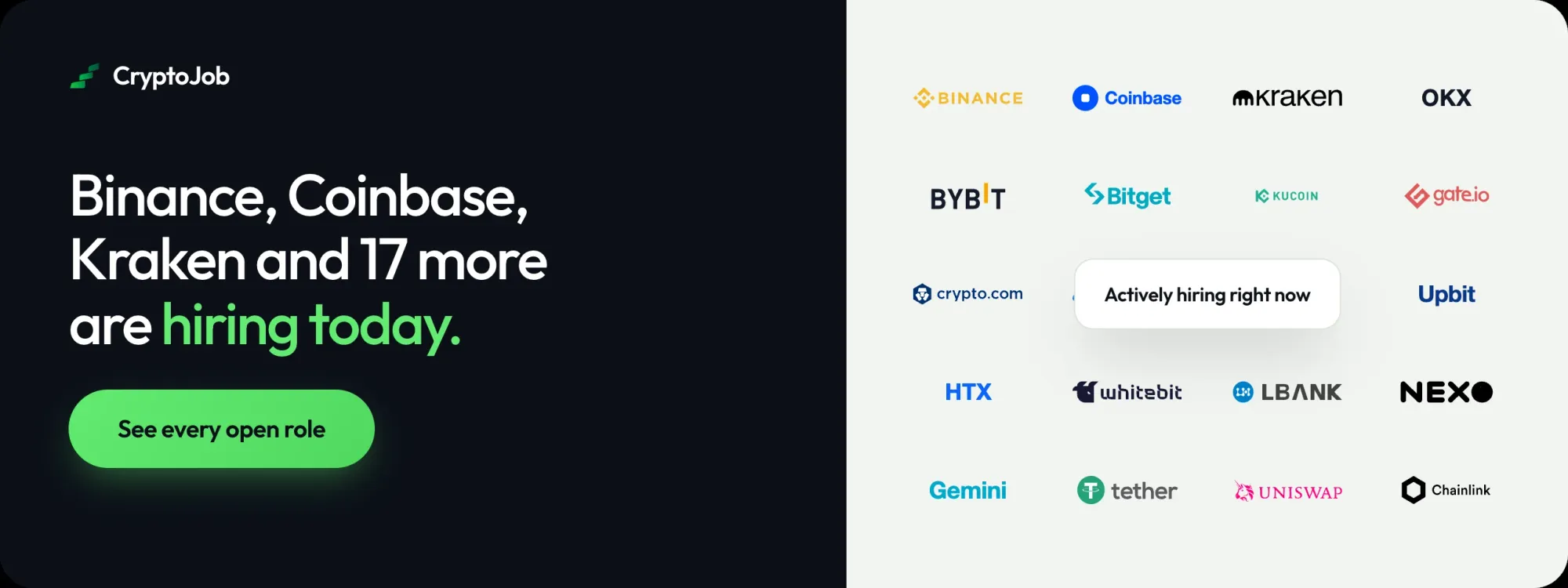
Exchanges dominate because they run global queues around the clock. OKX, Kraken, Crypto.com, Binance and Bybit all maintain continuous support hiring across regions, and Coinbase staffs large operations teams for its retail and institutional lines.
The second tier is wallets and payment apps. Hardware wallet makers and even market makers like GSR post support and service desk roles, often hybrid across hubs such as London, Singapore and Dubai.
Outsourcing firms are the controversial third lane. Several exchanges route tier one volume through BPO providers, which pays less but offers the fastest hiring process and still counts as crypto experience on a resume. For a map of how exchange hiring works end to end, read our guide on how to get a job at a crypto exchange.
4. What skills get you hired without experience?
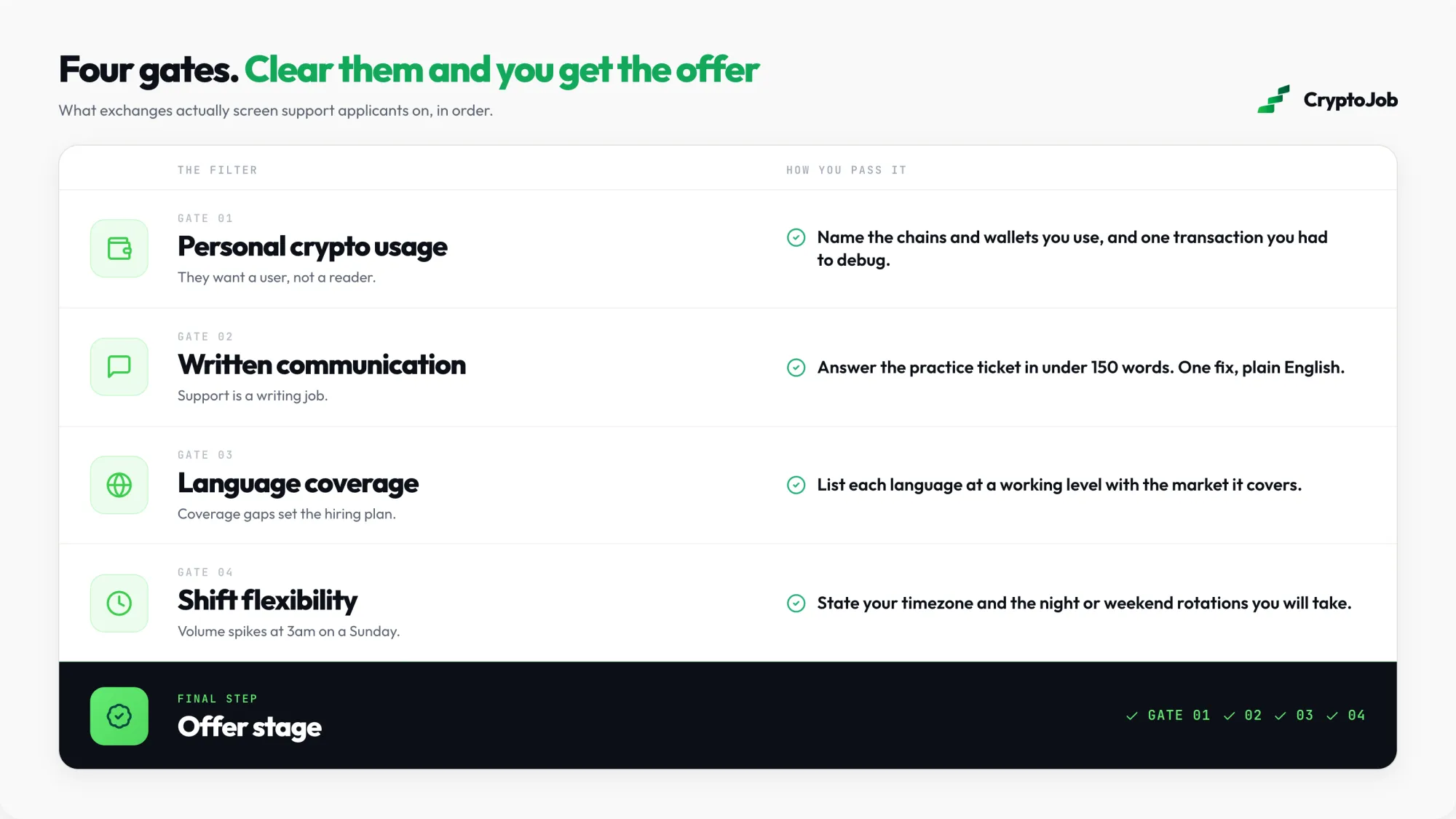
Genuine platform fluency beats everything. Candidates who have personally traded, moved funds between networks, recovered from a failed transaction and passed KYC on three exchanges can answer scenario questions that stump applicants with generic call center resumes.
Written clarity comes second. Most crypto support is chat and email, so hiring tests focus on calm, structured writing under pressure rather than phone charm, and a practice ticket answered in under 150 words of plain English is the usual format.
Language pairs and timezone flexibility are the quiet differentiators. Exchanges need coverage in Turkish, Vietnamese, Portuguese, Arabic and a dozen other markets, and willingness to take weekend or night shifts moves applications to the top. If you are starting from zero, our piece on getting a web3 job with no experience pairs well with this one.
5. How is AI changing crypto support work?
Honestly and quickly. Chatbots now deflect a large share of password resets and status questions, so exchanges hire fewer pure tier one agents than they did in 2023.
What remains is harder and better paid. Escalations, account takeover cases, VIP desks for high volume traders and compliance adjacent reviews all require human judgment, and listings increasingly ask agents to supervise or train the AI tools themselves.
Position for that shift in applications. Mentioning experience with support tooling, quality review or prompt writing for chatbots signals you are the agent who manages automation rather than the one it replaces.
6. Where do crypto support careers lead?
The classic promotion path runs agent to senior agent to team lead, but the interesting moves are lateral. Support alumni fill a striking share of compliance analyst, fraud investigation, operations and community roles because they already know the customers, the products and the failure modes.
Kraken staff have described exactly this pipeline publicly, and it repeats across the industry. Twelve to eighteen months of strong ticket work plus one internal referral beats an external application to those same teams almost every time.
Product is the sleeper destination. Nobody knows the sharp edges of an exchange better than the people fielding complaints about them, and support to product manager transitions happen at most large platforms. Our roundup of entry level crypto jobs shows how support compares against the other starting points.
7. How does support compare with other entry doors?
| Entry route | Typical 2026 pay | Barrier to entry | Best next step |
|---|---|---|---|
| Customer support | $45K to $70K | Low, platform fluency | Compliance or operations |
| Community moderation | $35K to $60K | Low, Discord fluency | Community manager |
| Compliance analyst | $60K to $90K | Medium, KYC background | Senior compliance |
| Junior developer | $80K to $120K | High, portfolio required | Protocol engineering |
8. What does a shift in the queue actually look like?
Most exchanges run follow the sun coverage, so you work a fixed eight or nine hour window with the queue handed across regions at boundaries. A typical shift mixes thirty to sixty chat and email tickets with a couple of escalations, plus scheduled time for knowledge base updates.
Tooling is standard fintech fare. Zendesk or Intercom for tickets, internal admin panels for account lookups, blockchain explorers for transaction tracing and a macro library you will both use and quietly improve.
Volatility sets the tempo. A calm week feels like any support job, while a major price move or an outage can triple volume overnight, which is why exchanges pay attention to composure in hiring and why burnout planning matters in this role.
9. What red flags should you watch in support listings?
Fake crypto support jobs are a real scam category, so screen employers as hard as they screen you. Legitimate companies never ask you to pay for equipment or verification, never route interviews entirely through Telegram and never ask you to use your own wallet to process customer funds.
Verify the posting against the company's official careers page before applying, and treat recruiter messages bearing unusually high pay for zero experience as bait. Real support pay sits in the ranges above, and offers far outside them are selling something.
Once hired, expect proper onboarding: contracts, official email, sanctioned tools and paid training. Anything less deserves a hard stop and a report.
10. Should you take a support role in 2026?
Yes if your goal is getting inside the industry rather than optimizing your first salary. The pay is modest, the shifts can be rough and the tickets can be brutal during volatile markets, yet no other role converts outsiders into insiders as reliably.
Treat it as a paid apprenticeship with an eighteen month plan. Learn everything, volunteer for the hard queues, build relationships across teams and then move. To start, browse web3 jobs with a support filter and shortlist exchanges hiring in your timezone this week.
FAQ
Do crypto support jobs require a degree?
Almost never. Listings ask for strong writing and real crypto familiarity, and exchanges routinely hire people whose only credential is demonstrable platform knowledge.
Are crypto customer support jobs remote?
Many are, though coverage needs mean shifts are fixed even when location is flexible. Some exchanges also run regional hubs and require hybrid attendance for fraud sensitive queues.
Is crypto support stressful?
During calm markets it is standard support work. During crashes and outages, volumes spike and customers are frightened about money, so resilience and clear escalation habits matter more here than in most support jobs.
Will AI eliminate crypto support jobs?
It is shrinking simple tier one work while expanding escalation and quality roles. Agents who learn to work alongside the automation are being promoted, not replaced, based on 2026 hiring patterns.