$ANSEM: Who Created the Token and Who Got Paid
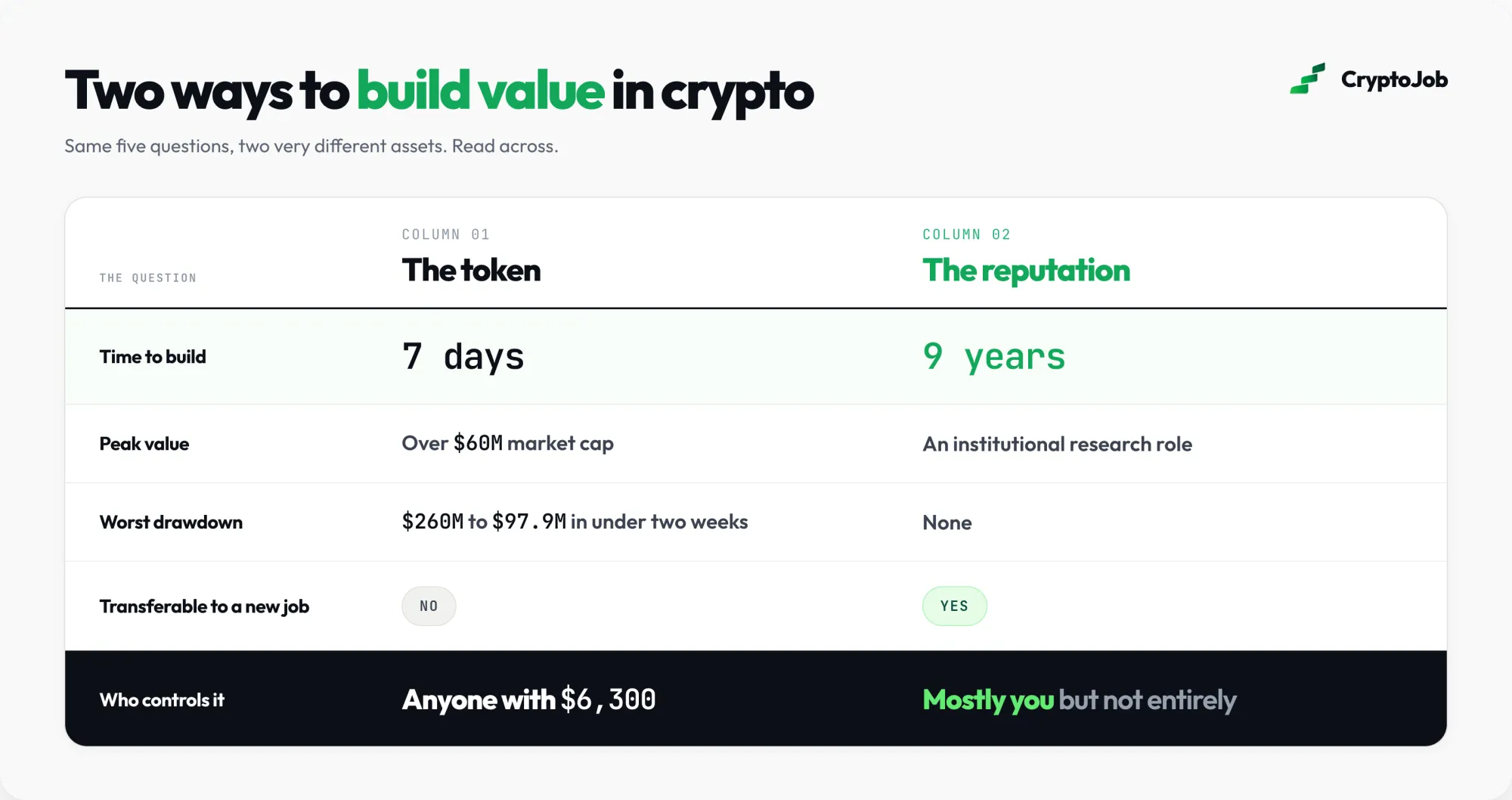
A stranger spent $6,300 launching a token named after someone he'd never met, then sold up and left. It worked because of five years of public track record he had nothing to do with.

TLDR
- An anonymous dev spent about $6,300 on ANSEM and airdropped 650M tokens to a wallet he didn't own
- He sold his remainder for about $5,500 and left. The token later ran 20,000%+ in a week
- It worked on nine years of crypto reputation, not on the token
- Zion Thomas is a Georgia Tech CS grad and ex-Capital One engineer who led research at TCG Crypto
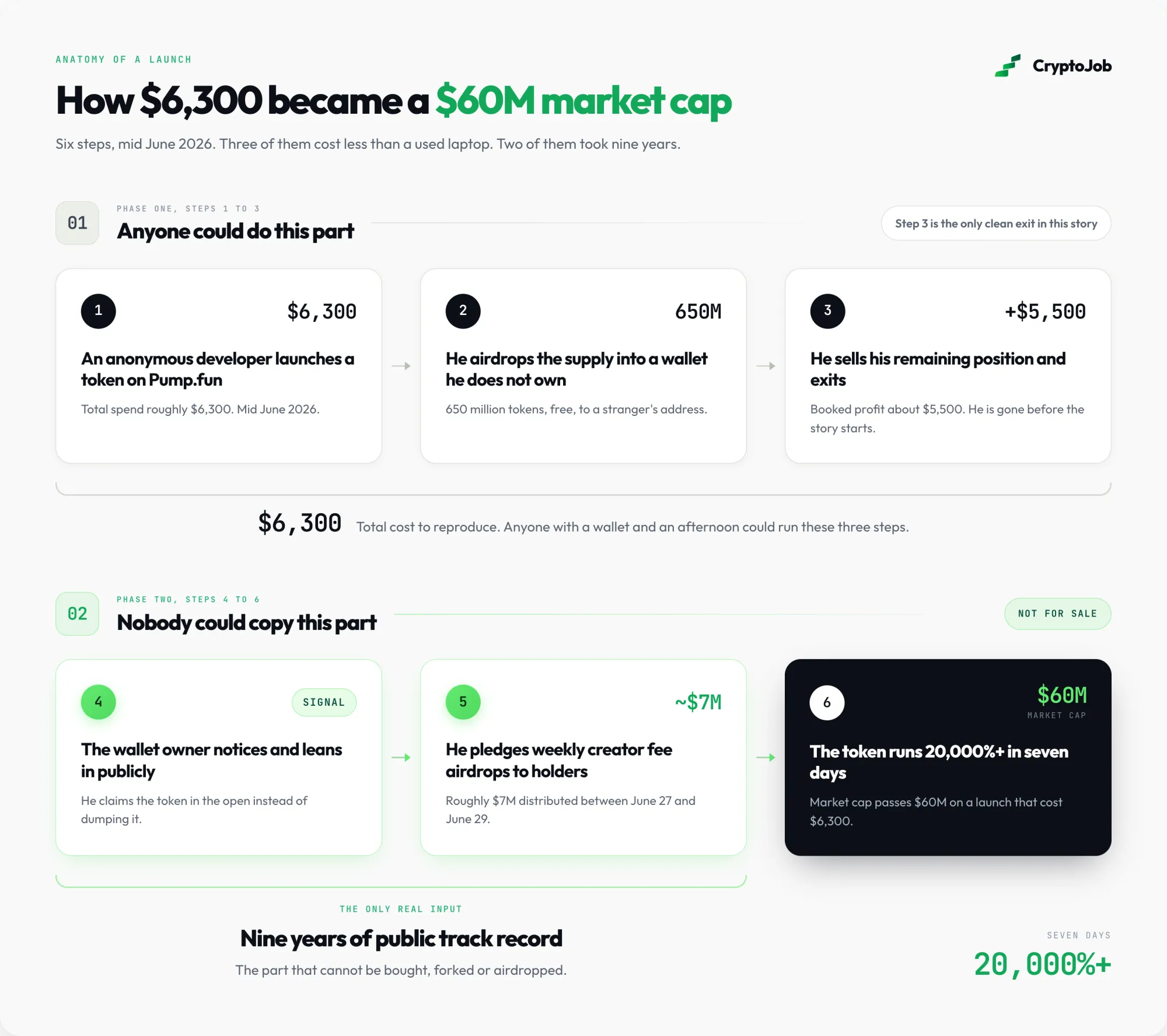
An anonymous developer spent roughly $6,300 launching a token in mid-June 2026. He gave 650 million of them away, free, to a wallet belonging to someone he had never spoken to. Then he sold what was left for about $5,500 and disappeared.
The token he launched later ran somewhere between 20,000% and 26,000% in seven days, depending on which outlet you read. It passed a $60 million market cap.
He is the only person in this story who took a clean profit and walked away.
The mechanism is worth understanding if you work in crypto, because it wasn't a technical exploit. It was a bet on nine years of somebody else's crypto reputation, and it paid off. If you're building a career rather than a position, you can browse web3 jobs across research, engineering and analysis roles.
1. What actually happened with the ANSEM token?
The strategy was blunt. Deposit tokens into a famous wallet and let the name do the marketing.
The name belonged to Ansem, real name Zion Thomas, who posts as @blknoiz06 and is widely called "The Solana Guy". He has somewhere between 750,000 and a million followers on X, built on a real track record of early and vocal support for Solana plus early calls on Dogwifhat and Bonk.
Thomas did not create the token. He could have ignored the airdrop or dumped it. Instead he leaned in, announcing he would redistribute part of his Pump.fun creator fee revenue to holders through weekly random airdrops rather than launching a token of his own.
He distributed roughly $7 million in tokens between June 27 and 29, stating a goal of growing the holder base from around 25,000 wallets to one million. The token, branded The Black Bull, went vertical.
2. Why did crypto reputation make a $6,300 launch work?
Because the reputation had been compounding for nine years before anyone tried to monetise it.
Zion Thomas first encountered Bitcoin in a senior-year emerging technologies course at Georgia Tech, graduating with a computer science degree in 2017. He then spent roughly four years as a software engineer at Capital One, trading crypto on the side with starting capital reported at around $3,000. He quit in early 2021 to go full-time.
The calls that built the reputation are specific and checkable. 50 and stayed bullish through the post-FTX collapse when it traded near $8. He was early to both Dogwifhat and Bonk.
CoinDesk named him one of the most influential people in crypto in 2024.
He has served as Head of Research at TCG Crypto, the blockchain arm of The Chernin Group. He also co-founded the Bullpen trading terminal.
That combination is the asset. The follower count alone wouldn't do it, since plenty of accounts have followers. What made the airdrop strategy viable was a verifiable history of correct public calls, attached to a real name, with institutional roles confirming it.
One analyst described the arrangement as a credible figure voluntarily aligning his incentives with his community, in public, with his reputation as collateral. That last phrase is the whole thing.
3. What does an onchain resume have to do with any of this?
Crypto hiring has been moving toward verifiable public work for years. Commits, audits, deployed contracts and published research all count. The argument is that a portfolio you can check beats a CV you have to trust.
ANSEM is that argument taken to an extreme, and it cuts both ways.
The upside is that Thomas's public record was legible enough that a stranger could underwrite a five-figure bet on it. Nobody had to take his word for anything. The calls were timestamped and public.
The downside is that he had no say in it. Multiple Solana tokens using the ANSEM name launched nearly simultaneously when his name started trending, and he publicly distanced himself from several of them. A verifiable public reputation is also a reputation other people can build products on without asking.
For anyone building a web3 personal brand, that's the trade. Legibility gets you hired, and it also gets you used.
4. Is this a crypto career path or a lottery ticket?
Look carefully at who earned what, because the answer isn't flattering to the obvious reading.
The deployer made about $5,500 on a $6,300 spend and exited early. That's a modest return in absolute terms, and by far the best risk-adjusted outcome in the story.
Thomas ended up holding roughly 58% of supply, and Rugcheck.xyz warned of manipulation risk from that concentration. By late July his holdings had fallen from about $260 million at peak to $97.9 million. That is a paper loss of roughly $162 million in under two weeks. He didn't sell.
Most buyers arrived after the chart was already vertical.
The durable career asset here isn't the token. It's the four years of salaried engineering and nine years of public analysis that made the token possible, plus the institutional research roles that pay regardless of what any chart does.
5. How do you build a web3 personal brand that actually hires you?
Four things separate a reputation that converts from one that just accumulates followers.
Be publicly wrong sometimes. A track record of only wins reads as survivorship bias. Timestamped calls that didn't work, openly acknowledged, are what make the wins credible.
Attach it to real work. Thomas has an engineering background and a named institutional role behind him. Pure commentary accounts are far more fragile than commentary backed by employment.
Make it checkable. Public repos, published research and on-chain history all qualify. The test is whether a hiring manager can verify it in five minutes without asking you for references.
Own the distribution. Followers on a platform are rented. An email list or a body of published work is owned.
| Signal | How long to build | What it gets you |
|---|---|---|
| Follower count | Months | Attention, low trust |
| Timestamped public calls | 1 to 3 years | Credibility with traders |
| Shipped code or audits | 1 to 2 years | Engineering interviews |
| Published research | 1 to 3 years | Analyst and research roles |
| Institutional role | 3 to 5 years | Everything above, compounded |
6. What are the risks of building a public reputation?
Worth being clear-eyed, because the ANSEM case shows both edges.
You lose control of your own name. Multiple Solana tokens using the ANSEM name launched nearly simultaneously, and Thomas publicly distanced himself from several. Anyone with $6,300 can attach your identity to an asset you have no involvement in.
Association becomes liability. Once your name is on a token, its collapse is partly your story whether or not you touched it. Analysts noted that a project resting on one person's attention reverses the moment that attention shifts.
Concentration invites scrutiny. Rugcheck.xyz flagged manipulation risk from the wallet concentration. Whether or not that reflected intent, holding 58% of a token bearing your own name is a position you have to defend publicly, permanently.
Public reputations are illiquid. Thomas held through a drawdown from roughly $260 million to $97.9 million. Selling would have been read as abandoning the community he had just recruited. The reputation that created the position also constrained his ability to leave it.
None of this argues against building in public. It argues for keeping the reputation attached to employment and shipped work rather than to any single asset. That is exactly the structure that made him credible in the first place.
7. What should you take from this?
That a stranger could turn nine years of someone else's public work into a $6,300 trade tells you exactly how valuable a legible reputation has become in crypto.
It also tells you that the person with the reputation captured less of the upside than the person who noticed it first, and carried all of the downside.
Build the record, then attach it to real employment. You can browse web3 jobs in research, engineering and on-chain analysis, which are the roles where a public track record translates most directly into offers.
FAQ
Who created the ANSEM token?
An anonymous developer launched it on Pump.fun in mid-June 2026, spending roughly $6,300, then airdropped 650 million tokens to Ansem's publicly known wallet and sold his remaining position for about $5,500.
Did Ansem launch his own token?
No. He has said he does not create tokens and has publicly distanced himself from copycat coins using his name. He did later pledge to redistribute Pump.fun creator fees to holders.
Who is Ansem?
Zion Thomas, known as @blknoiz06. A Georgia Tech computer science graduate who worked as a software engineer at Capital One before moving to full-time crypto trading in 2021, and has served as Head of Research at TCG Crypto.
How much did Ansem lose on the token?
His holdings fell from about $260 million at peak to $97.9 million by late July 2026, a paper loss of roughly $162 million. He did not sell, and held around 58% of supply.
Does an onchain resume actually help you get hired?
For engineering, research and analyst roles, verifiable public work is increasingly weighted above credentials. It matters less for compliance, legal and operations roles, where formal qualifications still carry more weight.